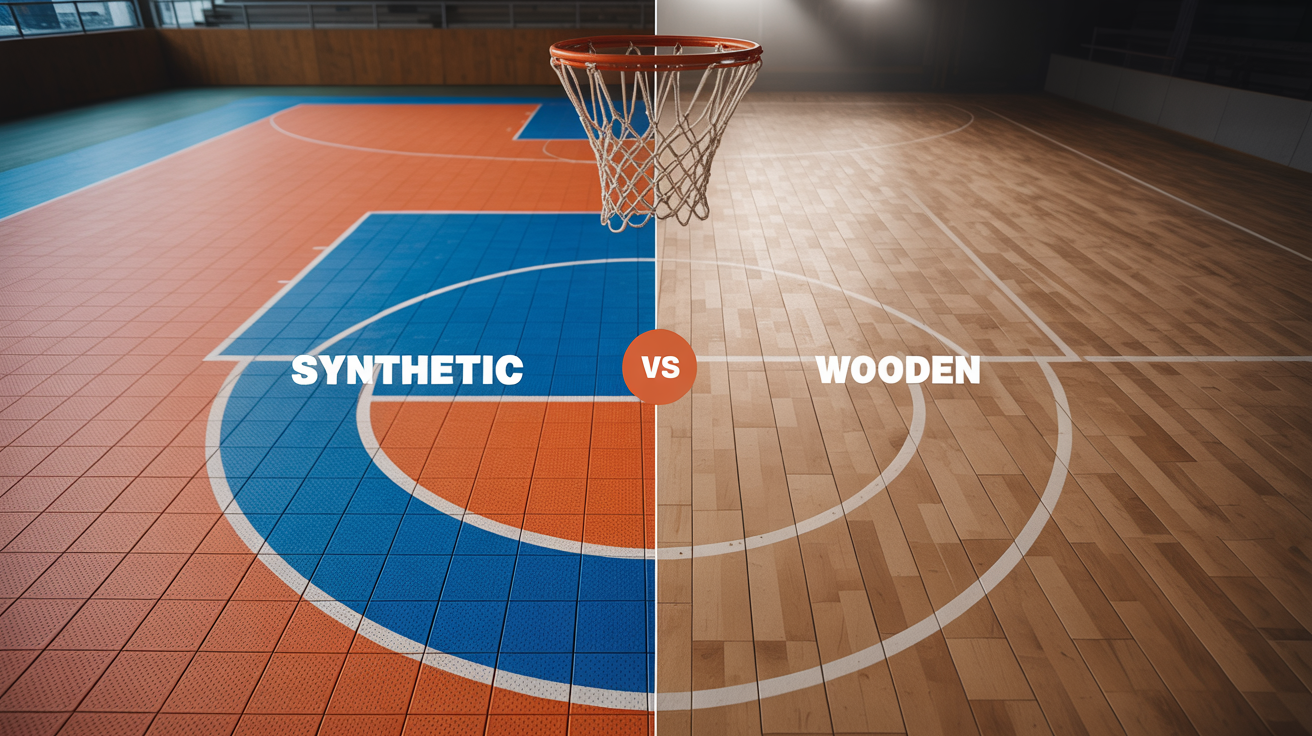
Choosing sports flooring is more than a mere functional decision; it is a long-term investment in performance, safety, and durability. The comfort of the athletes, their safety, and even the standard of play itself all depend on the flooring, be it an indoor badminton court, a squash arena, or an outdoor basketball facility. Synthetic floors and wooden sports floors are the two leading options in the market, each with its own advantages.
Being an approved sports flooring supplier, DSS Sports Infra has the best expertise in aiding its clients in making decisionally educated ones. Having decades of experience in the development of sports infrastructure and currently having a growing portfolio throughout India, we take pride in being your trusted sports infrastructure consultant and turnkey solutions provider.
Installation Process: Synthetic vs Wooden Flooring
Basically, synthetic flooring accounts for surfaces such as an EPDM surface for sports, PVC and polyurethane surfaces, and so forth. It offers more resilience, works out to be less maintenance, and cheaper. It is normally found in outdoor basketball court surfaces, multipurpose court surfaces, and track-and-field surfaces.
Meanwhile, wooden flooring sports flooring will usually be best quality timber such as Maple wood, granting great bounce, aesthetics, and comfort underfoot-ideal for indoor gaming of badminton, squash, and basketball.

Benefits of Synthetic Sports Flooring
The synthetic flooring is built with high-tech materials used in a series of weathering tests and heavy usage. Here’s how it may be right for your facility:
Cost-Effective & Durable: Synthetic types of sports flooring, such as EPDM, are inexpensive and durable.
Weather Resistance: Outdoor basketball courts and multipurpose outdoor areas need this kind of surface.
Low Maintenance: It’s not a surface that requires wax refinishing or varnishing.
Shock Absorption: Protects against joint injury.
Being the most important feature within consideration of price and durability, schools, colleges, and public sports complexes heavily favor this.
Advantages of Wooden Sports Flooring
We are talking about wooden flooring in sports; Maple wooden flooring is well-known for precision, beauty, and sports excellence.
A Sports Bounce: The ball should bounce in these flooring types: squash, basketball, badminton.
Comfort for Athletes: The surface has natural shock-absorbing characteristics that prevent fatigue and reduce the risk of injury.
Appealing: This enhances any indoor sports arena to a much higher level.
Custom Installation: It fits optimally with both floating and fixed subfloor systems.
If you aim to set up a professional indoor sports facility, wooden floors are the cream of the crop, especially for concrete-like squash court wooden flooring, and badminton court flooring.

Comparison At a Glance:
Here’s how synthetic and wooden flooring compare:
Synthetic Sports Floor:
- Better outdoors and all-weather type
- Maintenance is easier and cheaper for these floors
- City schools, parks, multi-use spaces, etc.
Wooden Sport Floor:
- Preferred for professional indoor courts
- Expensive but premium
- Periodically maintained and cared for
Why DSS Sports Infra Is Your Ideal Flooring Partner
DSS Sports Infra is highly skilled in sports facility construction all across India-from local community grounds to international-standard arenas. Being the foremost company in the field of sports infrastructure, we provide :
Turnkey sports infrastructure services : From concept to construct
Well versed with all types of flooring : That is synthetic, wooden, or hybrid flooring
Customized court solutions : From badminton court flooring to squash court flooring
Local know-how: Indian based with a good regional presence backed by our GMB profile
Whether you want to build a school gym or a medium-size multi-sport complex, we’ll be your consulting team for all sporting projects. So do check out past projects and client testimonials on dssportsinfra.com.
Frequently Asked Questions (FAQs)
1. What are the life periods of synthetic vs. wooden sports flooring?
The life period is generally 8 to 12 years with the least maintenance for synthetic flooring, whereas wooden sports flooring can reach 20 years with maintenance, which includes frequent polishing.
2. Is EPDM sports flooring fit for all outdoor situations?
EPDM being highly weather-resistant makes it a great candidate for outdoor basketball courts and athletic tracks.
3. Is it possible to install synthetic flooring indoors?
Synthetic flooring was preferred indoors in multipurpose halls and school gymnasiums because of its cheap price.
4. Is Maple wood worth considering for sports floors over other types of wood?
Definitely, because maple wood offers a uniform grain, resilience, and probably the best shock absorption, making it the preferred choice for professional-grade indoor courts.
5. Why should I choose DSS Sports Infra over other suppliers?
As a premier sports infrastructure company and approved suppliers of sports flooring DSS offer turnkey solutions, expert consultancy with credible history all across India with fully customized designing using world-class materials.
Conclusion
Whether you’re building a community court or a world-class indoor arena, the decision between synthetic and wooden sports flooring can shape your entire facility. With the right advice from DSS Sports Infra, your flooring will not only meet performance standards but also elevate the entire playing experience.
Connect with us today at dssportsinfra.com or visit our Google Business Profile to start your project with India’s most reliable name in sports infrastructure development.
