The honest answer is yes — box cricket is one of the most viable small-to-medium sports business investments available in urban India right now.
But that answer comes with conditions. Profitable box cricket businesses share three things: the right location, the right construction quality, and an operator who understands the numbers before they start. Box cricket businesses that struggle almost always have a problem with one of these three — usually location, occasionally construction, and sometimes just a business plan built on optimistic assumptions rather than realistic ones.
This guide gives you the realistic picture — investment, revenue, expenses, profit margins, break-even timelines, and the factors that genuinely determine which side of the profitability line you land on. We also cover the legal requirements, the operational decisions that affect earnings, and what the market looks like in 2026 specifically.
If you are seriously considering a box cricket investment, read this before you sign a lease or hire a contractor.
Why Box Cricket Is Growing in India Right Now
Before the numbers, the context — because understanding why the market is growing matters for anyone deciding whether to invest.
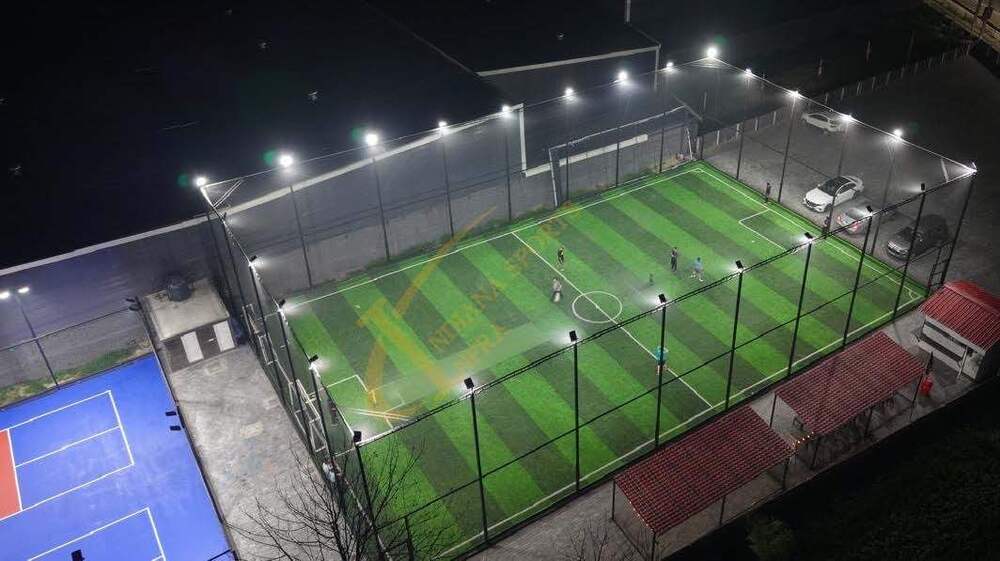
Box cricket has three structural advantages that make it unusually resilient as a sports business in India.
First, cricket needs no selling in India. The demand side is essentially pre-existing. Unlike padel or pickleball — which require market development and consumer education — box cricket is immediately understood and wanted by virtually every urban Indian in the 18–45 demographic. You are not creating demand. You are providing infrastructure for demand that already exists.
Second, it solves a real problem. Full-size cricket grounds are disappearing from Indian cities as land values rise. Box cricket gives people who grew up playing cricket a way to play it in an urban environment where a proper ground simply does not exist. That is not a trend — it is a demographic and geographic reality that will continue to intensify as Indian cities grow.
Third, the booking infrastructure is mature. Platforms like Playo, Hudle, and KheloMore have made court discovery and booking as easy as ordering food. A new venue listed on these platforms gets immediate visibility to an established user base of players actively looking for slots. This dramatically reduces the customer acquisition cost compared to building a new sports business category from scratch.
The result is a genuinely active market, growing, and accessible to new entrants with a well-located, well-built facility.
The Investment: What Does It Actually Cost to Start?
Your investment falls into two buckets: setup cost (one-time) and pre-operational cost (before revenue starts).
Setup Cost — Construction and Infrastructure
This is the most variable number in any box cricket business plan because it depends directly on court size, specification, and site conditions. We cover these in detail in our box cricket court setup cost guide, but here is the summary for business planning purposes:
| Court Size | Basic Spec | Mid Spec | Premium Spec |
|---|---|---|---|
| 60 × 30 ft (standard) | ₹7 – ₹9 lakh | ₹9 – ₹12 lakh | ₹12 – ₹16 lakh |
| 80 × 40 ft (commercial) | ₹12 – ₹16 lakh | ₹16 – ₹22 lakh | ₹22 – ₹30 lakh |
| 100 × 50 ft (large) | ₹20 – ₹26 lakh | ₹26 – ₹35 lakh | ₹35 – ₹45 lakh |
| Two courts (80×40 ft) | ₹20 – ₹28 lakh | ₹28 – ₹38 lakh | ₹38 – ₹50 lakh |
What “basic,” “mid,” and “premium” mean:
- Basic: Fibrillated turf, sand infill, painted MS frame, basic LED lighting at 150 lux, standard HDPE netting
- Mid: Monofilament turf, sand + rubber crumb infill, GI frame, 250 lux LED lighting, UV-treated HDPE netting
- Premium: Premium monofilament turf, full rubber crumb infill, hot-dip GI frame, 350+ lux LED lighting, heavy-duty netting, digital scoreboard, quality seating
Which specification should you choose?
For a commercial pay-and-play operation, mid-specification is the right call in most cases. Basic specification saves money upfront but produces a playing surface that experienced players notice and dislike — monofilament turf with rubber crumb infill simply feels and plays better, and in a market where players share reviews and recommendations on apps, surface quality directly affects repeat bookings and word-of-mouth. Premium specification is appropriate for operators targeting corporate events, tournaments, and a high-spending clientele where the facility needs to look and feel premium throughout.
Pre-Operational Costs
These are frequently underestimated or omitted entirely from business plans — which is one of the most common reasons new operators run out of capital before they reach profitability.
| Item | Estimated Cost |
|---|---|
| Security deposit on leased land (typically 3–6 months) | ₹90,000 – ₹6 lakh |
| Business registration (company/LLP) | ₹8,000 – ₹25,000 |
| GST registration | ₹2,000 – ₹5,000 |
| Municipal trade licence | ₹5,000 – ₹25,000 |
| Electrical connection / load upgrade | ₹50,000 – ₹2 lakh |
| Toilet and changing room construction | ₹1.5 – ₹4 lakh |
| Reception counter and booking setup | ₹30,000 – ₹1 lakh |
| Booking platform listing and integration | ₹10,000 – ₹30,000 |
| Initial marketing (signage, Google listing, social media) | ₹20,000 – ₹80,000 |
| Equipment (bats, balls, stumps, protective gear) | ₹30,000 – ₹1 lakh |
| Working capital reserve (3 months expenses) | ₹1.5 – ₹4 lakh |
| Total pre-operational | ₹4.5 – ₹19 lakh |
Total investment (construction + pre-operational) for a standard 80×40 ft commercial court:
| Scenario | Total Investment |
|---|---|
| Mid-spec court, leased land, basic amenities | ₹22 – ₹32 lakh |
| Mid-spec court, leased land, proper amenities | ₹28 – ₹42 lakh |
| Premium court, leased land, full facilities | ₹42 – ₹60 lakh |
| Mid-spec court, owned land | ₹18 – ₹28 lakh (land cost excluded) |
The most important number in this table: the working capital reserve. Box cricket courts do not open to full occupancy on Day 1. Building a customer base, getting listed on platforms, and developing regular corporate clients takes 2–4 months. During that ramp-up period, expenses continue while revenue is below steady-state. Operating without a 3-month working capital buffer is the single most common cause of new box cricket businesses struggling despite a good location and good construction.
Land: Buy, Lease, or Build on What You Have?
Land strategy is the most consequential decision in a box cricket business plan — it affects both your total investment and your monthly cost structure for the life of the business.
Leased Land (Most Common)
The majority of box cricket operators in India lease their land. This keeps the initial capital requirement lower and avoids the commitment risk of purchasing a plot for what is, ultimately, a business with a 10-year horizon.
What to look for in a lease:
- Minimum 5-year initial term with renewal option — shorter leases create unacceptable business risk
- Clear rent escalation terms — caps on annual rent increases protect your margin as the business scales
- Structural permission from the landlord for the net frame and concrete base
- Clarity on what happens to the infrastructure if the lease ends
Typical lease costs for box cricket plots in Maharashtra:
| Location | Monthly Lease (2,000–4,000 sq ft) |
|---|---|
| Mumbai suburbs (Thane, Navi Mumbai) | ₹40,000 – ₹1.2 lakh |
| Pune (residential/commercial areas) | ₹25,000 – ₹80,000 |
| Nashik, Aurangabad, Kolhapur | ₹12,000 – ₹40,000 |
| Smaller Maharashtra towns | ₹6,000 – ₹20,000 |
Land lease is typically the largest single monthly expense for an urban box cricket business — and the one that most dramatically affects profitability. A ₹80,000/month lease in Mumbai requires significantly more revenue to sustain than a ₹20,000/month lease in Nashik, which is why Tier-2 city box cricket businesses often have better margins than metro operations despite lower slot rates.
Owned Land
If you own the land or can purchase it, your monthly cost structure improves dramatically — no lease payment means lower breakeven revenue. The trade-off is higher upfront capital tied up in land. For a long-term investor with a 10+ year horizon, owning the land is almost always better economics.
Rooftop / Existing Structure
Building a box cricket court on an unused terrace or in an existing warehouse or hall eliminates land cost entirely. The constraints are structural (load assessment, ceiling height) rather than financial. This is the highest-ROI configuration when the structural conditions allow it — no land cost, lower total investment, and typically a well-located site in a dense urban area.
For full details on rooftop and indoor dimension requirements, see our box cricket court dimensions guide.
Revenue Model: How Box Cricket Courts Make Money
A box cricket court has three primary revenue streams and several secondary ones.
Primary Revenue Stream 1: Hourly Slot Bookings
The core business model. Players book slots by the hour, in groups of 8–20 people (depending on court size and format). The operator sets a per-hour rate and manages availability through a booking system.
Typical slot rates in Maharashtra (2026):
| Time Slot | Mumbai/Thane | Pune | Tier-2 Cities |
|---|---|---|---|
| Morning (6am–12pm) | ₹800 – ₹1,400/hr | ₹600 – ₹1,000/hr | ₹400 – ₹700/hr |
| Afternoon (12pm–5pm) | ₹700 – ₹1,200/hr | ₹500 – ₹900/hr | ₹350 – ₹600/hr |
| Evening (5pm–10pm) | ₹1,500 – ₹2,500/hr | ₹1,000 – ₹1,800/hr | ₹700 – ₹1,200/hr |
| Night (10pm–12am) | ₹1,200 – ₹2,000/hr | ₹900 – ₹1,500/hr | ₹600 – ₹1,000/hr |
Evening slots (5pm–10pm) are the most valuable and most consistently booked. This is where the majority of revenue is generated — office-goers, college students, and recreational players almost universally prefer evening slots. Morning slots attract serious cricket academy clients and early-rising regulars. Afternoon slots on weekdays are typically the hardest to fill.
Daily revenue model (80×40 ft court, moderate occupancy):
| Slot | Rate | Booked Hours | Revenue |
|---|---|---|---|
| Morning (6am–12pm) | ₹1,000/hr | 2 hours | ₹2,000 |
| Afternoon (12pm–5pm) | ₹900/hr | 1.5 hours | ₹1,350 |
| Evening (5pm–10pm) | ₹1,800/hr | 4.5 hours | ₹8,100 |
| Night (10pm–12am) | ₹1,400/hr | 1 hour | ₹1,400 |
| Total weekday | 9 hours | ₹12,850 |
Weekend (Saturday/Sunday) — typically 80–100% occupancy:
| Slot | Rate | Hours | Revenue |
|---|---|---|---|
| Full day (6am–12am) | ₹1,200–₹2,000/hr | 14 hours | ₹21,000 – ₹28,000 |
Monthly revenue projection (25 weekdays + 8 weekend days):
| Scenario | Weekday Revenue | Weekend Revenue | Monthly Total |
|---|---|---|---|
| Conservative (60% weekday, 85% weekend) | ₹1.93 lakh | ₹1.4–1.8 lakh | ₹3.3 – ₹3.7 lakh |
| Moderate (70% weekday, 90% weekend) | ₹2.25 lakh | ₹1.7–2.1 lakh | ₹3.9 – ₹4.3 lakh |
| Strong (80% weekday, 95% weekend) | ₹2.57 lakh | ₹1.85–2.3 lakh | ₹4.4 – ₹4.9 lakh |
Note: These are Pune-level rates for an 80×40 ft court. Mumbai rates are 30–50% higher. Tier-2 city rates are 30–40% lower.
Primary Revenue Stream 2: Corporate Bookings
Corporate bookings are the most valuable revenue source per slot — and the most stable. A company that books a court every Thursday evening for 2 hours generates predictable recurring revenue with zero marketing cost after the initial relationship is established.
Corporate rates typically run 20–40% above standard slot rates because groups are larger, the booking is usually confirmed in advance, and there is minimal price sensitivity. A single corporate client booking 8 hours per month at ₹2,500/hr generates ₹20,000/month in locked revenue.
How to build corporate clients:
- Direct outreach to HR and admin contacts at companies within 2–3 km of your facility
- Listing on corporate wellness platforms and employee engagement apps
- Offering trial slots at discounted rates for first-time corporate groups
- Providing a frictionless billing experience — companies want an invoice, not a UPI request
Primary Revenue Stream 3: Tournaments and Events
Hosting box cricket tournaments — weekend league formats, corporate tournaments, colony-vs-colony events — generates significant revenue in concentrated bursts. A 16-team weekend tournament on a single court generating ₹800–₹1,200 per participating team in entry fees can produce ₹12,800–₹19,200 in a single weekend, on top of the regular slot revenue from non-tournament hours.
Recurring monthly or quarterly league formats build a loyal player community and generate advance revenue that helps smooth the seasonal variability in regular slot bookings.
Secondary Revenue Streams
These are smaller but genuinely add up:
| Revenue Stream | Monthly Potential | Notes |
|---|---|---|
| Refreshment counter (water, energy drinks, snacks) | ₹10,000 – ₹35,000 | Low effort, high margin |
| Equipment rental (bats, pads, gloves) | ₹5,000 – ₹15,000 | Casual players arriving unprepared |
| Coaching sessions (in partnership with a coach) | ₹8,000 – ₹25,000 | Morning slot utilisation |
| Membership / season pass plans | ₹15,000 – ₹50,000 | Reduces churn, provides advance revenue |
| Photography / streaming (premium events) | ₹5,000 – ₹20,000 | Tournament events |
A well-run facility with all secondary streams active can add ₹40,000–₹1.2 lakh per month to the core slot booking revenue.
Monthly Expenses: The Real Cost of Running a Box Cricket Court
Every business plan needs a realistic expense model. Here is what a standard 80×40 ft box cricket operation actually costs to run per month:
| Expense Item | Monthly Cost (Mumbai/Thane) | Monthly Cost (Pune) | Monthly Cost (Tier-2) |
|---|---|---|---|
| Land lease | ₹50,000 – ₹1.2 lakh | ₹30,000 – ₹80,000 | ₹12,000 – ₹40,000 |
| Electricity (lighting, fans, other) | ₹15,000 – ₹40,000 | ₹12,000 – ₹30,000 | ₹8,000 – ₹20,000 |
| Staff (1–2 attendants, reception) | ₹20,000 – ₹45,000 | ₹15,000 – ₹35,000 | ₹10,000 – ₹25,000 |
| Booking platform commission (10–20%) | ₹15,000 – ₹50,000 | ₹10,000 – ₹35,000 | ₹6,000 – ₹20,000 |
| Maintenance (turf, nets, lights) | ₹5,000 – ₹15,000 | ₹5,000 – ₹12,000 | ₹3,000 – ₹8,000 |
| Marketing (social media, paid ads) | ₹8,000 – ₹25,000 | ₹5,000 – ₹20,000 | ₹3,000 – ₹10,000 |
| Insurance | ₹3,000 – ₹8,000 | ₹2,000 – ₹6,000 | ₹1,500 – ₹4,000 |
| Miscellaneous (equipment, consumables) | ₹3,000 – ₹8,000 | ₹2,000 – ₹6,000 | ₹1,500 – ₹4,000 |
| Total monthly expenses | ₹1.19 – ₹3.11 lakh | ₹0.81 – ₹2.24 lakh | ₹0.45 – ₹1.31 lakh |
Profit and Loss: The Realistic Model
Combining the revenue and expense models:
Scenario A — Standard 80×40 ft Court, Pune Location, Mid Spec
| Item | Monthly Amount |
|---|---|
| Gross revenue (slots + secondary) | ₹3.8 – ₹4.5 lakh |
| Total expenses | ₹1.1 – ₹1.8 lakh |
| Net profit | ₹2 – ₹3.4 lakh/month |
| Net profit margin | 50–65% |
Scenario B — Standard 80×40 ft Court, Mumbai Suburb (Thane), Mid Spec
| Item | Monthly Amount |
|---|---|
| Gross revenue (slots + secondary) | ₹5.5 – ₹7 lakh |
| Total expenses | ₹2 – ₹3.1 lakh |
| Net profit | ₹2.4 – ₹3.9 lakh/month |
| Net profit margin | 45–58% |
Scenario C — Standard 60×30 ft Court, Tier-2 City (Nashik/Aurangabad)
| Item | Monthly Amount |
|---|---|
| Gross revenue (slots + secondary) | ₹1.8 – ₹2.5 lakh |
| Total expenses | ₹0.6 – ₹1.0 lakh |
| Net profit | ₹0.8 – ₹1.5 lakh/month |
| Net profit margin | 44–62% |
Net profit margins of 40–65% are achievable and realistic for well-run box cricket operations across different city tiers. This is significantly better than most retail or F&B businesses at comparable investment levels.
Break-Even Timeline: When Do You Start Making Money?
Break-even is the point at which your cumulative net profit equals your total initial investment.
| Investment | Monthly Net Profit | Break-Even |
|---|---|---|
| ₹25 lakh (Tier-2 city, 60×30 ft) | ₹80,000 – ₹1.2 lakh | 21–31 months |
| ₹35 lakh (Pune, 80×40 ft, mid spec) | ₹2 – ₹3 lakh | 12–18 months |
| ₹50 lakh (Mumbai suburb, 80×40 ft, premium) | ₹2.5 – ₹3.5 lakh | 14–20 months |
| ₹70 lakh (Mumbai suburb, two courts, mid spec) | ₹4 – ₹5.5 lakh | 13–18 months |
Two courts consistently shows the best break-even economics — the per-court construction cost drops because base, electrical, and structural costs are shared, while revenue roughly doubles. If your plot allows it, two courts from the start is almost always better economics than one court now and one later.
Ramp-up adjustment: In the first 2–3 months, expect 40–60% of steady-state occupancy while you build your customer base and platform visibility. Model your break-even timeline with this ramp-up factored in — not from Month 1 at full occupancy.
Legal Requirements for a Box Cricket Business in India
This is the section most business plans skip — which creates real problems later. Here is what you actually need:
Business Registration
Choose your entity type before you do anything else. The three practical options for a box cricket business:
Sole Proprietorship: Simplest and cheapest to register. Appropriate for a single operator running one court. Unlimited personal liability — you are personally responsible for business debts.
Partnership Firm: Appropriate for two or more co-investors. Requires a Partnership Deed. Unlimited liability for all partners.
Private Limited Company: More complex and expensive to set up (₹15,000–₹25,000), but provides limited liability protection and is significantly better for investor credibility, bank loan eligibility, and future scalability if you plan to expand to multiple courts or bring in outside investors.
For any serious commercial investment above ₹25 lakh, a Private Limited Company is the right structure.
GST Registration
Mandatory once your annual turnover exceeds ₹20 lakh (for service businesses). Box cricket slot bookings are taxed at 18% GST under the sports services category. Register before you start operations — you will need a GST number for invoicing corporate clients, which is non-negotiable for any company’s accounts department.
Municipal Trade Licence
Required from your local municipal corporation (Municipal Corporation in cities, Municipality or Gram Panchayat in smaller areas). This is a location-specific licence authorising you to operate a sports/recreational business from your premises. In Maharashtra, this is applied for through the respective Municipal Corporation — MCGM in Mumbai, PMC in Pune, NMC in Nashik, and so on.
Documents typically required: business registration proof, property documents or lease agreement, site plan, and owner/landlord NOC. Processing time: 2–4 weeks. Cost: ₹5,000–₹25,000 depending on premises area and municipal body.
Shop and Establishment Licence
Required under the Maharashtra Shops and Establishments Act if you employ staff. Apply within 30 days of commencing business. This governs working hours, holidays, and employee welfare provisions. Cost: ₹500–₹2,000.
Land Use / Zoning Clearance
Before committing to a lease or plot, verify that the land is zoned for commercial or recreational use. Sports facilities typically require commercial or recreational zone classification. Operating a commercial sports business on land zoned as residential or agricultural creates legal vulnerability — the business can be ordered to shut down regardless of how much you have invested in construction.
Check the zoning classification with your local municipal planning department before signing any lease or purchase agreement.
Fire NOC
Required by most municipal bodies for any commercial premises. Apply to your local Fire Department. Cost: ₹2,000–₹10,000. Essential for insurance purposes as well.
Sports Facility Insurance
Not legally mandatory but practically essential. Player accident insurance covers liability if a player is injured on your court. Premises insurance covers damage to your infrastructure. Combined coverage for a single box cricket court costs approximately ₹25,000–₹60,000 per year — a small cost relative to the liability exposure.
What Separates Profitable Box Cricket Businesses from Those That Struggle
After seven years and hundreds of sports infrastructure projects across Maharashtra, here is what we consistently observe:
Location Is Everything — More Than Any Other Single Factor
A well-built court in a poor location will struggle regardless of quality. A modestly built court in an excellent location will fill its slots. Location factors in order of importance:
- Density of target demographic within 3 km — young professionals, college students, cricket-playing families
- Parking accessibility — evening group bookings almost always involve people driving
- Visibility and signage — a court you can see from a main road fills faster than one buried in a lane
- Competition density — how many other box cricket courts are within 2 km?
- Ease of access — near a main road, not behind 4 turns in a residential colony
Do not commit to a site without physically visiting it at 6pm on a weekday evening — the time when your busiest slots will run. Count the cars, observe the foot traffic, check the parking situation. If the area feels dead at peak hour, it will be dead for your business too.
Evening Lighting Quality Determines Peak Revenue
Evening slots (5pm–10pm) generate 50–65% of total slot revenue. A court with inadequate or poorly designed lighting — dark patches at the batting end, glare at shoulder height, flickering fixtures — loses bookings specifically to better-lit competitors. Players talk to each other. “That court has bad lighting” travels fast on WhatsApp groups and Playo reviews.
Invest in proper LED sports lighting. 250+ lux, evenly distributed across the full playing area. It is a revenue investment, not an optional extra.
Turf Quality Affects Repeat Bookings
The single most common player complaint on box cricket booking apps is poor turf quality — “the ball bounces inconsistently,” “the surface is patchy,” “the turf is worn out.” Experienced players — the ones who book regularly and fill weekday evening slots — immediately notice the difference between a monofilament turf with rubber crumb infill and a fibrillated mat with sand only.
Spending ₹1.5–₹3 lakh more on turf quality at construction is recovered in repeat booking rates within the first year. Cheap turf is a false economy in a pay-and-play business where player experience drives the revenue model. For the full breakdown of turf options and costs, see our sports flooring cost guide.
Platform Presence Is Not Optional
Get listed on Playo, Hudle, and KheloMore before you open — not after. Set up your Google Business Profile on Day 1. These platforms drive 40–60% of new customer discovery for urban box cricket venues. Operating without platform presence means relying entirely on walk-in and word-of-mouth, which takes significantly longer to scale.
The commission (10–20% of platform-booked revenue) is a real expense but it is customer acquisition cost that is far cheaper than running your own paid advertising to achieve the same result.
Corporate Clients Are the Business Stabiliser
Individual slot bookings are inherently variable — they depend on weather, local events, school calendars, and dozens of other factors. Corporate clients book regardless of these variables because they are employer-funded, pre-planned, and recurring. One corporate client worth ₹15,000–₹25,000 per month in bookings provides revenue stability that no amount of individual slot filling can match.
Dedicate real effort to corporate outreach in the first 3 months. Visit HR managers at companies within 3 km. Offer a free trial slot. Provide a professional invoice. Make the corporate booking experience frictionless. The revenue stability this creates is what keeps the business profitable through seasonal dips.
Is Box Cricket Right for You? An Honest Assessment
Box cricket is a good investment if:
- You have identified a genuinely good location with adequate footfall and parking
- You have a minimum of ₹28–₹40 lakh to invest including working capital reserve
- You have the time and energy to manage operations actively for the first 6 months
- You are prepared to invest in good turf, good lighting, and a proper platform presence
- You have a 5+ year lease or own the land
Box cricket is probably not right for you if:
- Your location has adequate land but poor accessibility or low surrounding population density
- Your total budget is under ₹15 lakh — you will either under-build or under-capitalise the business
- You are planning to run it entirely hands-off from Day 1 — the first year requires active management
- You have a lease shorter than 5 years — business risk is too high to justify the capital investment
Frequently Asked Questions
Total investment for a standard 80×40 ft commercial court — construction, pre-operational costs, and working capital — ranges from ₹28 lakh to ₹50 lakh depending on specification, location, and lease terms. Entry-level 60×30 ft courts in Tier-2 cities can be started with ₹18–₹25 lakh total investment.
A well-located, well-built 80×40 ft court in Pune generates ₹3.5–₹4.5 lakh gross revenue per month. In Mumbai suburbs, ₹5–₹7 lakh. In Tier-2 cities, ₹1.8–₹2.8 lakh. Net profit after expenses is typically 45–65% of gross revenue for an efficiently run operation.
What is the break-even period for a box cricket business? Most well-located box cricket investments break even within 14–24 months at moderate to strong occupancy. Tier-2 city operations with lower revenue per slot but also lower land and operating costs typically break even in 20–32 months.
What licences do I need to start a box cricket business in India? At minimum: business registration (proprietorship, partnership, or Pvt Ltd), GST registration, municipal trade licence, and Shop and Establishment licence if you have employees. Verify land use/zoning clearance before committing to a site. A Fire NOC is required by most municipal bodies and insurance providers.
Is box cricket more profitable than football turf? Both are strong businesses but box cricket typically has a lower entry cost for a given revenue potential because the court area required is smaller than a football turf. Box cricket also runs well on smaller plots in dense urban areas where football turf land requirements are harder to fulfil. The decision should be driven by your location’s demographic — cricket-dominant areas are better for box cricket, football-dominant areas (more common in southern India) lean towards turf football.
How many players does a box cricket court need per booking to be profitable? An 80×40 ft court at ₹1,500/hr needs to average 8 booked hours per day to generate ₹12,000/day in slot revenue. At 25 days per month, that is ₹3 lakh in slot revenue — comfortably profitable at typical expense levels. This requires filling roughly 50% of available hours, which is achievable within 3–4 months at a well-located venue.
The Bottom Line
Box cricket is profitable in India in 2026 — for operators who choose the right location, build to the right specification, and run the business actively in the critical first year.
The numbers work. Net margins of 45–65% on a ₹3–₹5 lakh monthly revenue base, break-even in 14–24 months, and a business model with multiple revenue streams and a genuinely growing customer base. These are better economics than most small business categories available at this investment level.
What does not work is a box cricket court built to the minimum specification in a marginal location with an undercapitalised launch. That combination produces a business that struggles for the first 18 months, gradually deteriorates as deferred maintenance compounds, and either gets rebuilt at significant cost or closed.
Get the location right. Build it properly. Capitalise it adequately. The business model does the rest.
DS Sports Infra builds box cricket courts across Maharashtra and India — from site assessment through to turf, structure, netting, and lighting. We provide full itemised quotes and honest guidance on court size and specification for your specific location and investment level.
Contact DS Sports Infra for a Free Box Cricket Site Assessment →
