Cricket is not just a sport in India. It is a national obsession that cuts across age, income, and geography. From packed stadiums in Mumbai and Kolkata to makeshift grounds in small-town Maharashtra, cricket is played everywhere — and the demand for proper facilities has never been higher.
Whether you are a school planning a practice wicket, a housing society building a box cricket court, a sports academy laying multiple practice strips, or a private investor building a commercial cricket turf business, the first real question you face is the same: what is this going to cost?
Most answers you will find online are either too vague to be useful or too old to reflect what materials and labour actually cost in 2026. This guide fixes that. We have broken down cricket pitch construction costs by pitch type, use case, and budget scenario — based on what projects are actually costing in India right now.
DS Sports Infra has delivered sports infrastructure projects across Maharashtra and India for over 7 years, including cricket practice facilities, synthetic pitch installations, and complete ground construction. These figures are real.
First: Understanding What You Are Actually Building
Before costs, definitions — because “cricket pitch” means very different things to different buyers, and the cost difference between them runs from ₹50,000 to several crore.
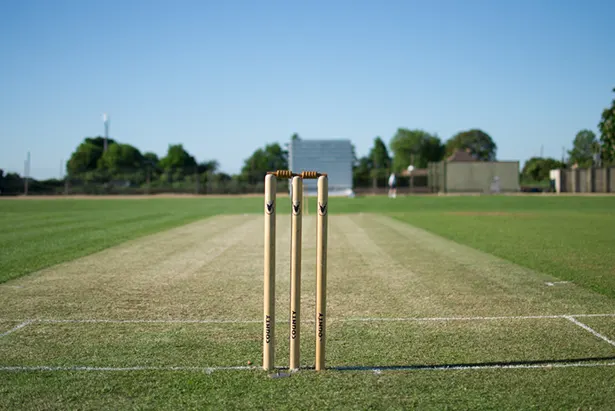
The pitch itself: The standard cricket pitch is 22 yards (20.12 metres) long and 10 feet (3.05 metres) wide — measured from bowling crease to bowling crease. This is the actual strip where bowling and batting happen, and it is the same dimension at every level from school cricket to Test matches as per MCC Laws and ICC regulations.
The pitch vs the ground: The pitch is just the playing strip. The full cricket ground includes the outfield, boundary, fencing, and in most cases practice nets alongside the main ground. These are separate cost items.
Types of cricket facility most commonly built in India:
| Type | What It Is | Who Builds It |
|---|---|---|
| Single practice net / pitch | One synthetic or matting pitch strip with a net enclosure | Schools, academies, clubs |
| Multi-net practice facility | 4–8 practice strips side by side with individual nets | Cricket academies, large schools |
| Box cricket court | Enclosed compact ground (30×60 ft to 40×80 ft) for modified cricket | Commercial operators, societies |
| Full cricket ground (natural turf) | Complete outfield + natural turf pitch for match play | Clubs, institutions, municipalities |
| Full cricket ground (synthetic outfield + pitch) | Complete ground with artificial turf throughout | Academies, private operators |
Each of these has a completely different cost profile. We cover them all below.
1. Single Cricket Practice Net — ₹1.5 to ₹6 Lakh
The single practice net is the most common entry point for schools, small clubs, and residential societies that want to provide cricket without the cost or land requirement of a full ground. It is a single pitch strip — typically 22 yards long and 8–10 feet wide — enclosed by a net on three sides and overhead, with a bowling run-up area and batting end.
Surface options for a single practice net:
Coir Matting: The most affordable and most widely used surface for school practice nets. Coir (coconut fibre) mat is rolled over a concrete or compacted base and provides a consistent surface that behaves similarly to natural turf on bounce. Standard sizes are 8×33 ft (single pitch) and 8×66 ft (double pitch). Coir mats cost ₹329–₹2,189 per roll depending on thickness and grade.
Synthetic / Artificial Turf Pitch: Better performance, longer lifespan, and a more consistent surface than coir matting. Synthetic pitch strips are laid with a pile height of 12–20mm and a shock-absorbing underlay for realistic bounce. Artificial cricket pitch surface costs ₹40–₹95 per sq ft for the material.
Cemented Pitch with Matting: A concrete or plaster base with a removable matting overlay — common in urban areas where permanent turf is not practical. Cost-effective and very durable as a base.
Single practice net cost breakdown:
| Component | Estimated Cost |
|---|---|
| Base preparation (concrete/compacted gravel) | ₹20,000 – ₹60,000 |
| Pitch surface (coir mat or synthetic strip) | ₹15,000 – ₹80,000 |
| Net structure (GI pipe frame) | ₹30,000 – ₹70,000 |
| Netting (HDPE, overhead + sides) | ₹20,000 – ₹50,000 |
| Installation and labour | ₹15,000 – ₹40,000 |
| Total single net (coir mat) | ₹1 – ₹2.5 lakh |
| Total single net (synthetic turf) | ₹1.8 – ₹4 lakh |
| Total single net (premium synthetic + good structure) | ₹4 – ₹6 lakh |
2. Multi-Net Cricket Practice Facility — ₹6 to ₹25 Lakh
For a cricket academy, a large school, or any institution running regular coaching sessions, a single net is rarely enough. A multi-net facility with 4–8 parallel practice strips allows multiple batsmen and bowlers to train simultaneously — which is the standard setup for any serious coaching operation.
4-net practice facility (most common academy setup):
| Component | Estimated Cost |
|---|---|
| Base preparation and concrete slab (4 strips) | ₹1.5 – ₹3 lakh |
| Synthetic turf for 4 pitch strips | ₹1.5 – ₹3.5 lakh |
| MS/GI structural framework for 4 nets | ₹1.5 – ₹3 lakh |
| HDPE netting (overhead + side dividers + back) | ₹1 – ₹2.5 lakh |
| Bowling machine platform (optional) | ₹30,000 – ₹80,000 |
| Lighting for evening sessions (4–6 LED fixtures) | ₹60,000 – ₹1.5 lakh |
| Total 4-net facility | ₹6 – ₹13 lakh |
6-net practice facility:
| Component | Estimated Cost |
|---|---|
| Base and concrete work | ₹2.5 – ₹4.5 lakh |
| Synthetic pitch surfaces (6 strips) | ₹2.5 – ₹5 lakh |
| Steel structure for 6 nets | ₹2.5 – ₹4 lakh |
| Netting system | ₹1.5 – ₹3 lakh |
| LED lighting | ₹1 – ₹2 lakh |
| Total 6-net facility | ₹10 – ₹18 lakh |
What quality of synthetic turf should you specify for practice nets?
For practice nets, the key specifications are pile height (12–15mm is standard for cricket practice), yarn type (monofilament for consistent bounce), and the underlay system (a shock pad underlay improves bounce consistency and reduces surface hardness). The turf does not need to be the same grade as a match outfield — but the underlay and base must be right, or the bounce will be inconsistent and potentially dangerous for batsmen.
3. Box Cricket Court — ₹8 to ₹40 Lakh
Box cricket has become one of the most successful pay-and-play sports business models in India over the last five years. A compact enclosed ground — typically 30×60 ft to 40×80 ft — with modified cricket rules, indoor LED lighting, and artificial turf, generating income through hourly slot bookings. In urban Maharashtra, box cricket courts often run at 70–90% capacity on weekday evenings and are fully booked through weekends.
Standard box cricket court sizes and costs:
| Court Size | Area | Estimated All-In Cost |
|---|---|---|
| Entry-level (30×60 ft) | 1,800 sq ft | ₹8 – ₹12 lakh |
| Standard commercial (40×80 ft) | 3,200 sq ft | ₹14 – ₹22 lakh |
| Premium large (50×100 ft) | 5,000 sq ft | ₹25 – ₹40 lakh |
Full box cricket cost breakdown (standard 40×80 ft commercial court):
| Component | Estimated Cost |
|---|---|
| Land preparation and base (concrete/compacted) | ₹2 – ₹4 lakh |
| Artificial turf (40×80 ft, good quality with infill) | ₹4 – ₹8 lakh |
| MS steel boundary structure | ₹2 – ₹4 lakh |
| Overhead and side netting (HDPE heavy duty) | ₹2 – ₹4 lakh |
| LED floodlighting (4–6 poles) | ₹1.5 – ₹3 lakh |
| Pitch marking and stumps | ₹20,000 – ₹50,000 |
| Entry gate, scoreboard, seating (basic) | ₹50,000 – ₹1.5 lakh |
| Total 40×80 ft commercial court | ₹12 – ₹25 lakh |
What turf specification for box cricket?
For a commercial box cricket court where the surface takes 6–8 hours of play per day, turf quality is a business decision, not just a performance one. Cheap turf wears out within 2–3 years under that kind of usage. Specify a minimum 20mm pile height monofilament yarn with silica sand infill — rubber crumb infill adds cost but significantly improves cushioning and pace of the surface. A good quality commercial box cricket turf on a well-prepared base should last 6–8 years before replacement is needed.
The rooftop box cricket option: Urban operators with access to terrace space but no ground-level land are increasingly building rooftop box cricket courts. With appropriate structural engineering (the load of a concrete or compacted base plus players and equipment must be assessed), this is a legitimate option that several commercial operators in Mumbai, Pune, and Thane have executed successfully.
4. Full Cricket Ground — Natural Turf — ₹25 Lakh to ₹1 Crore+
A full natural turf cricket ground — outfield, boundary, pavilion, and a natural grass playing pitch — is the highest aspiration for clubs, municipalities, and serious cricket institutions. It is also the most expensive and most maintenance-intensive option, which is why most private operators in 2026 are choosing synthetic alternatives for most of the ground and reserving natural turf only for the playing pitch itself.
What a full natural turf ground includes:
The playing area of a standard cricket ground is a circle or oval with a minimum boundary of 65 metres from the centre of the pitch. A full ground covers approximately 60,000–80,000 sq ft of outfield plus the pitch square (a prepared area of multiple pitches within the centre of the ground, typically 6–12 strips depending on the level of the club).
Component cost breakdown (standard club-level natural turf ground):
| Component | Estimated Cost |
|---|---|
| Site clearance, levelling, and earthwork | ₹3 – ₹8 lakh |
| Drainage system (subsurface pipes + outlets) | ₹5 – ₹15 lakh |
| Pitch square preparation (black cotton soil / red clay) | ₹3 – ₹8 lakh |
| Outfield turfing (natural Bermuda or Doob grass) | ₹5 – ₹15 lakh |
| Boundary fencing and rope | ₹3 – ₹8 lakh |
| Practice net facility (4–6 nets) | ₹8 – ₹15 lakh |
| Sight screens (2 units) | ₹50,000 – ₹2 lakh |
| Score hut / basic pavilion | ₹3 – ₹10 lakh |
| Groundskeeping equipment (roller, mower, covers) | ₹2 – ₹5 lakh |
| Total natural turf ground (basic club level) | ₹32 – ₹86 lakh |
For a proper stadium-quality natural turf ground with permanent pavilion, seating, floodlights, and full-pitch square with 8–12 strips: ₹1 crore – ₹3 crore+.
The pitch square — what it actually costs to get right:
The pitch itself is the heart of the ground and the most technically demanding part of natural turf cricket infrastructure. A proper natural turf pitch requires:
- The right soil — black cotton soil (used across Maharashtra and central India) or red clay, depending on region, with correct clay content for binding and bounce
- Proper compaction — a rolled, layered base that provides consistent pace
- Correct preparation for match play — watering schedule, rolling sequence, covering and uncovering protocol
- A pitch curator or groundskeeper with real cricket pitch preparation experience
A well-prepared natural pitch square costs ₹3–₹8 lakh to build initially. The annual maintenance cost (curator salary, equipment, soil dressing, grass seed) runs ₹2–₹6 lakh per year. This ongoing cost is why many school and club grounds are moving toward cemented or synthetic pitch squares with only the outfield in natural grass.
5. Full Cricket Ground — Synthetic / Artificial Turf — ₹20 to ₹60 Lakh
For schools, academies, housing society grounds, and commercial operators, a synthetic cricket ground — artificial turf throughout, or synthetic pitch with natural outfield — offers the best combination of all-weather playability, low maintenance, and realistic performance.
Option A: Synthetic pitch strip + natural grass outfield
This is the most practical option for most schools and clubs. The outfield is maintained in natural Bermuda or Doob grass (low cost, relatively low maintenance), and the playing pitch area is replaced with a high-quality artificial turf strip that can be used every day without rest or recovery time.
Cost: Pitch area (synthetic) ₹1.5–₹4 lakh + natural outfield ₹5–₹12 lakh = ₹6.5–₹16 lakh total.
Option B: Full synthetic turf ground (outfield + pitch)
The all-synthetic ground eliminates maintenance almost entirely — no mowing, no watering schedule, no rest days. The surface can take play 7 days a week in any weather. It is the fastest-growing choice for urban academies and residential sports facilities.
| Component | Estimated Cost |
|---|---|
| Site preparation and base (compacted gravel + concrete edge) | ₹3 – ₹6 lakh |
| Artificial turf (60,000–80,000 sq ft at ₹70–₹130 per sq ft) | ₹12 – ₹30 lakh |
| Drainage system | ₹3 – ₹6 lakh |
| Boundary fencing | ₹3 – ₹6 lakh |
| Pitch markings and crease lines | ₹30,000 – ₹80,000 |
| Practice nets (4–6 net facility) | ₹8 – ₹15 lakh |
| Floodlighting (6–8 poles) | ₹3 – ₹7 lakh |
| Sight screens and score hut | ₹1 – ₹3 lakh |
| Total full synthetic ground | ₹33 – ₹73 lakh |
Synthetic turf specification for cricket outfield:
Not all artificial turf is appropriate for cricket. The key specifications:
- Pile height: 25–35mm for outfield (allows natural rolling of the ball)
- Yarn type: monofilament (better ball roll and durability)
- Infill: silica sand + rubber crumb (essential for correct ball bounce and player safety)
- UV stabilised yarn (mandatory for Indian conditions — untreated yarn degrades significantly faster under Indian sun)
- Drainage rate: minimum 100mm per hour (prevents waterlogging during monsoon)
Cheap turf that skips the rubber crumb infill or uses fibrillated yarn instead of monofilament will feel wrong to play on and will degrade faster. Specify correctly from the start.
The Hidden Costs in Every Cricket Pitch Project
Just like every other sports infrastructure category, the headline figure is never the full figure. Every cricket pitch project needs these in the budget:
Soil testing and site assessment — ₹10,000 to ₹50,000 For natural turf grounds especially, soil type, drainage capacity, and ground slope must be assessed before any design decisions are made. Skipping this step leads to drainage failures and pitch preparation problems that cost far more to fix after the fact.
Drainage — ₹3 to ₹15 lakh Cricket is played through the monsoon season in India — or rather, cannot be played when the ground is waterlogged. Proper drainage is the most consistently underestimated cost in Indian cricket ground projects. Both surface drainage (gradient design) and subsurface drainage (perforated pipes, outlets) must be engineered, not assumed. A ground that waterlogs after heavy rain loses weeks of usage per monsoon season.
Floodlighting — ₹3 to ₹10 lakh Evening play is where most urban cricket academies and box cricket operations generate their highest revenue. Floodlighting for a full ground requires 6–10 poles with appropriate LED sports fixtures. Undersized or incorrectly specified lighting creates shadows and glare that make evening play unpleasant and potentially unsafe. Budget properly — lighting is a revenue multiplier.
Netting — ₹1 to ₹5 lakh Ball-stop netting around the boundary and overhead netting for practice areas is essential for safety and operational efficiency (fewer balls lost to neighbouring areas). HDPE netting costs vary significantly by thickness and UV-treatment grade. Specify heavy-duty UV-treated netting — cheaper untreated nets degrade within 2–3 seasons in Indian sun.
Groundskeeping equipment (natural turf only) — ₹2 to ₹5 lakh A motorised roller, ride-on mower, pitch covers, and watering equipment are non-negotiable for a natural turf ground. These are often not included in construction quotes and land as a surprise at handover.
Annual maintenance — ₹25,000 to ₹6 lakh per year Synthetic surfaces: ₹25,000–₹80,000 per year for cleaning, brushing, infill top-up, and minor repairs. Natural turf ground: ₹2–₹6 lakh per year including curator, watering, mowing, soil dressing, and equipment maintenance.
Realistic All-In Budget by Project Type
Here is what each project type realistically costs from start to finish — not just the surface:
| Project Type | All-In Realistic Budget |
|---|---|
| Single practice net (coir mat) | ₹1 – ₹2.5 lakh |
| Single practice net (synthetic) | ₹2.5 – ₹5 lakh |
| 4-net academy facility | ₹8 – ₹15 lakh |
| 6-net academy facility | ₹14 – ₹22 lakh |
| Box cricket court (entry-level) | ₹8 – ₹12 lakh |
| Box cricket court (commercial, 40×80 ft) | ₹14 – ₹25 lakh |
| Box cricket court (premium, large) | ₹28 – ₹45 lakh |
| Full ground (synthetic pitch + natural outfield) | ₹8 – ₹20 lakh |
| Full ground (all-synthetic) | ₹35 – ₹75 lakh |
| Full ground (natural turf, club level) | ₹35 – ₹90 lakh |
| Full ground (natural turf, with pavilion + floodlights) | ₹80 lakh – ₹2 crore+ |
Natural Turf vs Synthetic — Which Is Right for Your Project?
This is the most important decision in most cricket facility projects. Here is an honest comparison:
| Factor | Natural Turf | Synthetic Turf |
|---|---|---|
| Initial cost | Lower (outfield) | Moderate to high |
| Annual maintenance cost | High (₹2–6 lakh/year) | Low (₹25,000–80,000/year) |
| Days of play per year | 200–250 (rest days + monsoon) | 340–365 (all-weather) |
| Pitch preparation expertise needed | Yes — curator essential | No |
| Bounce and feel | Best for match play | Very good, improves with spec |
| Risk of waterlogging | High without drainage | Low with proper drainage |
| Lifespan | Ongoing (with maintenance) | 8–12 years (turf), then replace |
| Best for | Competitive clubs, institutions | Academies, schools, commercial |
For most schools, academies, housing societies, and private commercial operators in India in 2026, synthetic is the practical choice. The all-weather playability, dramatically lower maintenance burden, and consistent surface quality outweigh the higher initial cost over a 5–10 year horizon.
Natural turf remains the right choice for institutions with a serious competitive cricket programme, a dedicated groundskeeper, and a long-term commitment to maintaining the ground to match-play standards.
What Does It Cost to Maintain a Cricket Pitch?
Budgeting for construction is only half the picture. Maintenance costs run for the full life of the facility.
Synthetic practice nets / box cricket:
- Regular brushing and cleaning: ₹5,000–₹15,000 per maintenance session (recommended every 6 months or 500 hours of play)
- Infill top-up (rubber granules and silica sand): ₹20,000–₹60,000 every 2–3 years
- Minor net repairs: ₹5,000–₹20,000 per year
- Annual maintenance budget: ₹25,000 – ₹80,000
Full synthetic ground:
- Monthly brushing and cleaning: ₹10,000–₹20,000 per session
- Annual infill replenishment: ₹40,000–₹1.5 lakh
- Net replacement (every 5–7 years): ₹2–₹5 lakh
- Turf replacement (every 8–12 years): ₹15–₹40 lakh
- Annual maintenance budget: ₹80,000 – ₹2 lakh
Natural turf ground:
- Groundskeeper salary: ₹1.5–₹3.5 lakh per year
- Water supply and irrigation: ₹30,000–₹80,000 per year
- Soil dressing and seed: ₹30,000–₹1 lakh per year
- Equipment maintenance: ₹20,000–₹50,000 per year
- Pitch covers replacement (every 5 years): ₹50,000–₹1.5 lakh
- Annual maintenance budget: ₹2.5 – ₹6 lakh
Can Government Funding Help?
For schools, colleges, and registered sports clubs, government funding can offset a significant portion of cricket infrastructure costs.
Khelo India Scheme: Cricket practice facilities, nets, and pitch construction are admissible under the Khelo India infrastructure grants. In Maharashtra, applications go through the Sports Authority of Maharashtra State (SAMS). The scheme has funded cricket practice net facilities at schools across multiple states.
Samagra Shiksha Abhiyan: Government and government-aided schools can access sports infrastructure grants under Samagra Shiksha, which specifically covers sports equipment and facility construction. This is the most accessible funding route for schools.
BCCI District Cricket Associations: Several state cricket associations and the BCCI provide development grants for ground upgrades at affiliated clubs. For institutions that are formally affiliated with the local district cricket association, it is worth checking the current-year development fund availability.
CSR Funding: Cricket infrastructure is a highly visible, community-friendly CSR project. Companies in Maharashtra with active CSR mandates — particularly in the sports equipment, FMCG, and infrastructure sectors — are known supporters of cricket at the grassroots level. A well-prepared project proposal with clear impact numbers has a meaningful chance of attracting partial CSR funding.
How to Compare Contractor Quotes
When you receive quotes from multiple contractors, the headline number is almost never enough to make a decision. Ask every contractor to break down:
- Turf specification — pile height, yarn type, infill material, brand name, UV rating, and warranty from the manufacturer
- Base work — what is included, what is assumed, and what happens if the base is in worse condition than expected
- Netting specification — HDPE weight (grams per sq metre), UV treatment grade, expected lifespan
- Structural frame — MS or GI pipe, wall thickness, coating (hot-dip galvanised lasts far longer than painted MS)
- What is explicitly excluded — lighting, electrical, drainage, and civil work are commonly excluded from sports contractor quotes
- Warranty — material warranty (from manufacturer) and workmanship warranty (from contractor), separately, with durations
A contractor who has built 10 cricket facilities for schools and academies in Maharashtra is a different risk profile from one whose experience is all in football and badminton. Ask for references specifically from cricket facilities.
Frequently Asked Questions
A single practice net with a coir matting surface and basic GI pipe structure can be built for ₹1–₹1.5 lakh on a prepared base. For synthetic turf surface and a better structural frame, budget ₹2.5–₹4 lakh. This is the most cost-effective cricket facility investment for any school.
A commercial 40×80 ft box cricket court with artificial turf, overhead netting, boundary fencing, and LED floodlights costs ₹14–₹25 lakh all-in. Entry-level 30×60 ft setups can be done in ₹8–₹12 lakh. Premium courts with high-quality turf, automated scoring, and spectator seating run ₹30–₹45 lakh.
For schools, synthetic is the clear practical choice. A synthetic pitch strip requires no groundskeeper, no rest days, and no watering schedule. It can be used every school day regardless of weather, and maintenance costs are minimal. Natural turf is better for competitive play but the maintenance burden and expertise requirement make it impractical for most schools
The Bottom Line
Cricket pitch construction in India in 2026 ranges from under ₹2 lakh for a single school practice net to ₹70+ lakh for a full synthetic ground, and beyond that for stadium-quality natural turf facilities. Every budget in this range has a viable option — the key is matching the right specification to the actual use case.
The mistakes that cost the most are not choosing the wrong surface tier — they are skipping base preparation, underspecifying drainage, using cheap untreated netting, and cutting corners on lighting. A well-built ₹15 lakh 4-net facility that uses proper turf on a good base, with quality netting and adequate lighting, is a better investment than a ₹10 lakh setup that needs replacing in 3 years.
Build once, build right — and build in the maintenance budget from day one.
DS Sports Infra has been building cricket infrastructure across India for over 7 years. We deliver practice net facilities, box cricket courts, full synthetic grounds, and combined multi-sport facilities — with detailed itemised quotes, not ballpark estimates. Contact us for a free site assessment anywhere in Maharashtra.
