If you’ve been researching sports flooring options for a court project, you’ve likely run into three familiar names — acrylic, PU flooring, and EPDM — and then run into a fourth one that doesn’t get explained nearly as well: SI-PU, or Silicone PU flooring.
SI-PU sits in an interesting middle ground in the sports flooring world. It’s not a separate category so much as an advanced evolution of standard PU systems, and understanding where it fits — and where it genuinely outperforms the alternatives — can save you from either overpaying for a system you don’t need or underspecifying a court that needs the extra performance.
This guide covers what SI-PU actually is, how it’s built, where it works best, and how it stacks up against the other flooring systems on the market.
What Is SI-PU Flooring?
SI-PU stands for Silicone Polyurethane, a self-leveling flooring system that combines a polyurethane elastic base layer with a silicone-modified top coat. The result is a surface that levels itself during application — flowing into a completely even, seamless finish rather than needing to be manually smoothed the way older PU systems do.
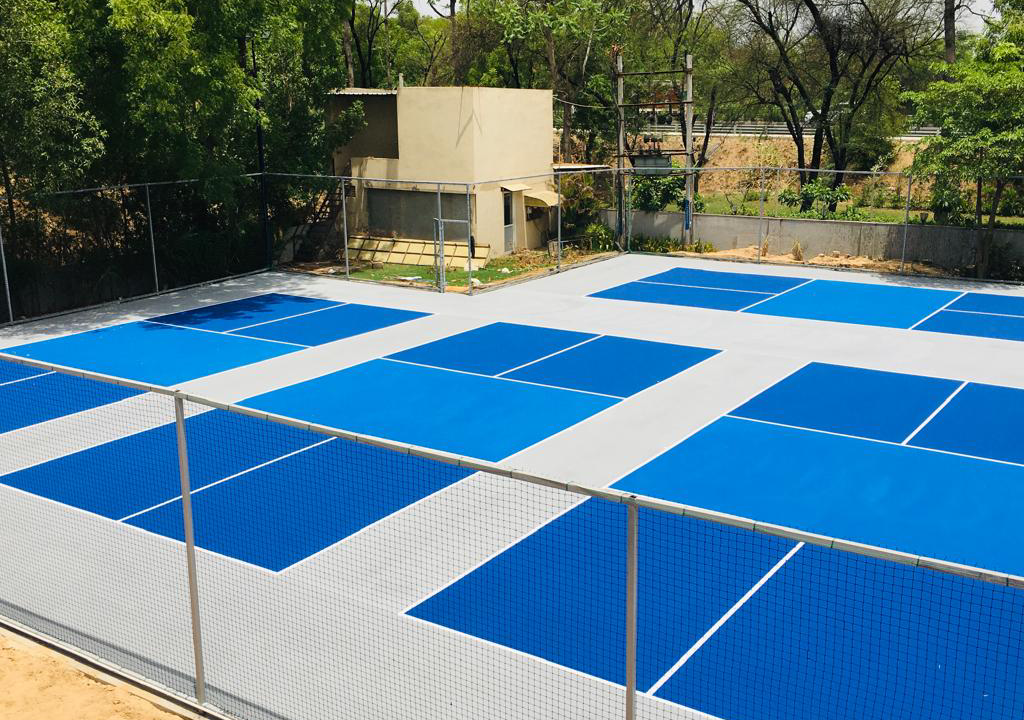
The system is typically built in layers:
- Base/elastic layer — a shock-absorbing polyurethane layer that provides cushioning and evens out minor sub-base irregularities
- Reinforcement layer (in higher-spec systems) — an additional strengthening layer for high-traffic durability
- Silicone PU top coat — a colored, UV-stable, textured surface layer that provides grip and the finished look of the court
Unlike traditional PU flooring, which relies purely on polyurethane chemistry throughout, SI-PU’s silicone-modified top layer adds better UV resistance, color stability, and weathering performance — which is a meaningful difference in a climate like India’s, where outdoor courts face intense sun exposure for most of the year.
How SI-PU Compares to Other Sports Flooring Systems
| Flooring Type | Best For | Installation Complexity | Typical Lifespan |
|---|---|---|---|
| SI-PU | Basketball, multi-purpose courts, indoor/outdoor | Moderate-high (specialist application) | 8–10 years |
| Standard PU Flooring | Basketball, badminton, indoor courts | Moderate | 6–8 years |
| Acrylic Flooring | Tennis, basketball, outdoor multi-sport | Low-moderate | 5–7 years |
| EPDM Flooring | Running tracks, play areas | Moderate | 8–10 years |
| Sports Vinyl Flooring | Indoor multi-sport halls | Low | 10–15 years |
The honest way to think about SI-PU is as a step up from standard PU, not a replacement for every flooring type on this list. It doesn’t compete directly with EPDM (which is track-specific) or vinyl (which is an indoor-only rolled system) — its real competition is standard PU and, in some outdoor applications, acrylic.
If you’re still deciding between broader flooring families rather than PU variants specifically, our synthetic vs wooden sports flooring comparison and indoor gym flooring: rubber vs vinyl vs PU guide are better starting points before narrowing down to a specific system like SI-PU.
Why the Self-Leveling Property Actually Matters
This sounds like a minor manufacturing detail, but it has real consequences for how the finished court performs.
Consistent ball bounce across the entire surface. Because the material flows and levels itself during curing, you avoid the subtle high and low spots that hand-troweled systems can develop — which matters directly for basketball, where inconsistent bounce is immediately noticeable to players.
Fewer seams and joints. A self-leveling application creates a more monolithic surface with fewer weak points where water can penetrate or cracking can start — a meaningful advantage during India’s monsoon season for outdoor installations.
Faster, more even cure. Because the material self-levels rather than requiring extensive manual finishing, application quality is less dependent on the individual installer’s manual technique — though correct base preparation and mixing ratios still require genuine expertise.
Where SI-PU Works Best
Multi-Purpose Indoor and Outdoor Courts
SI-PU’s biggest advantage is versatility. It performs well across basketball, badminton, volleyball, and futsal surfaces, making it a strong choice for facilities that need one surface to serve multiple sports rather than rebuilding for each discipline — a common requirement for schools, societies, and academies working with limited space.
High-UV, High-Heat Outdoor Installations
Because the silicone-modified top layer resists UV degradation better than standard PU, SI-PU tends to hold its color and surface integrity longer in outdoor courts exposed to intense sun — a real consideration across most of India, and specifically relevant for projects like the rooftop and terrace courts increasingly common in Mumbai apartment complexes, where heat exposure is amplified by rooftop positioning.
Facilities Prioritizing a Premium Finish
The seamless, self-leveling finish gives SI-PU courts a noticeably smoother, more polished look than hand-applied systems — relevant for academies, clubs, and commercial facilities where the court’s appearance is part of the member or client experience, not just its functional performance.
Renovation Projects Over Existing Hard Surfaces
SI-PU can typically be applied over a properly prepared existing concrete or asphalt base without needing full reconstruction, which makes it a practical option for facilities upgrading an aging court rather than rebuilding from the ground up.
Where SI-PU Isn’t the Right Choice
Running tracks. For dedicated athletic tracks, EPDM flooring remains the better-suited system — it’s purpose-built for track surfaces with the specific shock-absorption and rebound characteristics competitive running requires.
Budget-constrained outdoor multi-sport courts. If cost is the primary constraint and UV performance isn’t a major concern (for example, a court with partial shade or lower usage intensity), acrylic flooring delivers strong performance at a lower price point and simpler installation.
Large indoor multi-sport halls with heavy daily traffic. For high-traffic indoor halls, sports vinyl flooring or dedicated wooden flooring systems can offer longer lifespans and easier long-term maintenance for continuous indoor use.
Installation Process Overview
- Base assessment and preparation — the existing or new concrete/asphalt base is checked for moisture, cracking, and levelness before any coating begins
- Primer application — ensures proper adhesion between the base and the elastic layer
- Elastic base layer application — the shock-absorbing polyurethane layer is applied and allowed to cure
- Reinforcement layer (where specified) — added for high-traffic durability
- Silicone PU top coat — the colored, textured finish layer is applied, typically in two coats for even coverage and durability
- Line marking — court markings for the intended sport(s) are applied once the top coat has fully cured
- Final inspection — checking for even bounce, correct texture/grip, and proper edge sealing
Curing times vary by layer and climate conditions, but a full SI-PU installation typically takes longer than a straightforward acrylic coating due to the multiple layers and self-leveling cure time required between stages — this is worth factoring into your project timeline if you’re working toward a fixed opening date.
Maintenance Considerations
SI-PU courts generally need less frequent recoating than standard acrylic surfaces, but still benefit from:
- Regular cleaning to prevent grit buildup that can accelerate surface wear
- Periodic inspection for edge lifting or seam separation, particularly in outdoor installations
- Prompt repair of any surface damage before it spreads, since the layered structure means small issues can undermine adhesion if left unaddressed
For a broader look at what different flooring systems cost to install and maintain over their lifespan, our sports flooring cost guide for India breaks down pricing across all major systems, including PU-based options.
Frequently Asked Questions
Is SI-PU flooring worth the extra cost over standard PU?
For outdoor courts with significant sun exposure, or facilities wanting a premium, seamless finish, the added UV resistance and consistency of SI-PU generally justifies the cost difference. For indoor courts or budget-sensitive projects with lower UV exposure concerns, standard PU flooring often delivers comparable performance at a lower price point.
Can SI-PU be installed over an existing court surface?
In many cases yes, provided the existing base (typically concrete or asphalt) is structurally sound and properly prepared — this makes SI-PU a practical option for renovating aging courts without full reconstruction.
How long does an SI-PU court last before resurfacing is needed?
A well-installed and maintained SI-PU court typically lasts 8 to 10 years before resurfacing is needed, depending on usage intensity, climate exposure, and maintenance consistency.
Which sports is SI-PU flooring best suited for?
SI-PU performs particularly well for basketball, badminton, volleyball, and multi-purpose courts serving several sports on one surface — both indoors and outdoors.
The Bottom Line
SI-PU is best understood as a refined, higher-performance evolution of standard PU flooring — not a completely separate category. It earns its place specifically on multi-purpose courts, high-UV outdoor installations, and projects where a seamless, premium finish matters. For running tracks, EPDM remains the specialist choice, and for straightforward budget-conscious outdoor courts, acrylic often makes more practical sense.
The right call depends on your specific sport, site conditions, budget, and how the facility will actually be used — which is exactly what a proper site assessment should establish before any flooring system gets specified.
DS Sports Infra has delivered flooring installations — including PU, acrylic, EPDM, and specialty systems — for schools, academies, societies, and sports clubs across Maharashtra and India for over 7 years. We provide detailed, itemised quotations and a free site assessment before any commitment is made.
Contact DS Sports Infra for a Free Site Assessment and Flooring Recommendation
